Another excerpt from the 19thc chinese encyclopedia 通天曉 - all encompassing knowledge. This time, it is a short buddhist ritual, to protect living beings in water.
護生陀羅尼 樂生集。 LIFE PROTECTING DHARANI (from the Colleection of Joyful Living)
佛言。水中有微細蟲類,凡眼不能見者,故律中囊濾水方飲。
The Buddha said that water contains minuscule bugs, that are invisible to the normal eye. Thus the Vinaya states that water must be filtered with a bag before drinking.
若人能虔書護生陀羅尼,沉于河井及盛水器中,并為咒誦念佛號七遍,其蟲對生善趣。陀羅尼云 If a person sincerely wirte the Life-protecting dharani, and immerses it into a river, well, or water vessel, and chants the mantra and the name of the buddha 7 times, the bugs in the water will have fortunate rebirths. The dharani goes:

(此即 「唵縛悉波羅摩尼莎訶。九字梵書,不可誤筆寫。此九字寫于片木上桐油油過沈水中) The mantra is to be read OM WA XI BO LUO MO NI SO HE. The nine sanskrit characters above are not to be miscopied. They should be written on a wooden plank, oiled over with tung oil [to preserve it- ed] and then immersed in water.
念佛號自「南無歡喜莊嚴王諸佛。南無寶髮如來」 Chant the name of the buddha NAMO KING OF JOYFUL ADORNMENT BUDDHA NAMO PRECIOUS TOPKNOT BUDDHA (Ratnaśikhin Buddha)
https://books.google.nl/books?id=uAA9AQAAIAAJ&dq=%E8%A1%8C%E5%BB%9A%E9%9B%86&hl=nl&pg=PP921#v=onepage&q&f=false
Notes:
The name of the Precious Topknot buddha- Ratnaśikhin , comes from an episode of the Sutra of Golden Light, where Jalavāhana, one of the Buddha's previous incarnations, caused a whole pond of fishes to be reborn as devas by recituing the name of Ratnaśikhin Buddha. The episode is found in 25th chapter of the 31-chapter version of the sutra https://84000.co/translation/toh555 and the 17th chapter of the 21-chapter version of the sutra. https://84000.co/translation/toh557?left=open%3Atoc&right=closed%3Aendnotes&main=open%3Atranslation
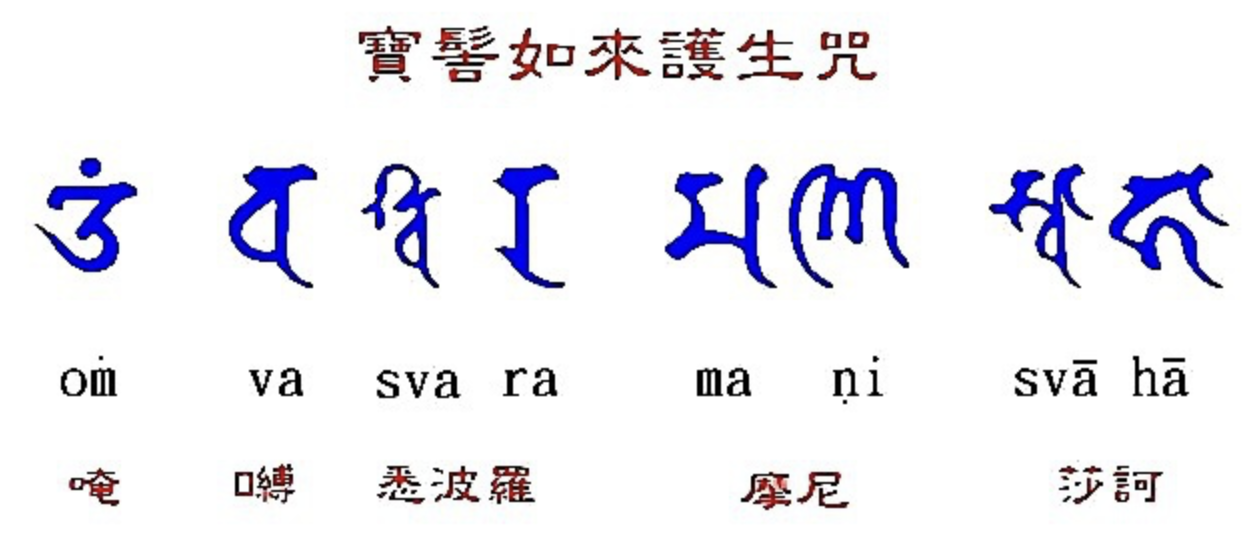
This ritual is still practised in modern buddhism. The mantra is found here in this book on protecting life written by Master Haitao, https://book.bfnn.org/books3/2034.htm#a13; and another liturgy (which involves chanting the name of Ratnaśikhin here: https://blog.udn.com/energy7429/173507102. and here http://www.baifodian.com/zixun/list.asp?id=2926 The mantra, in Siddham looks like this.
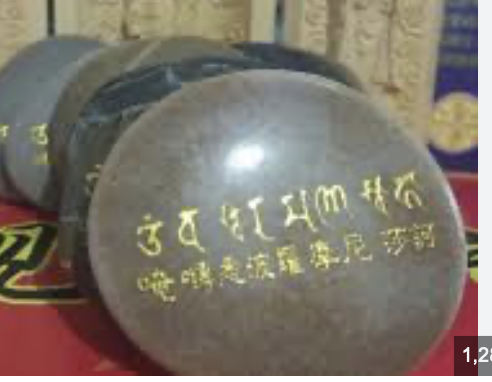
Stones engraved with th mantra are also produced http://www.xuefo.tw/nr/article48/476655.html
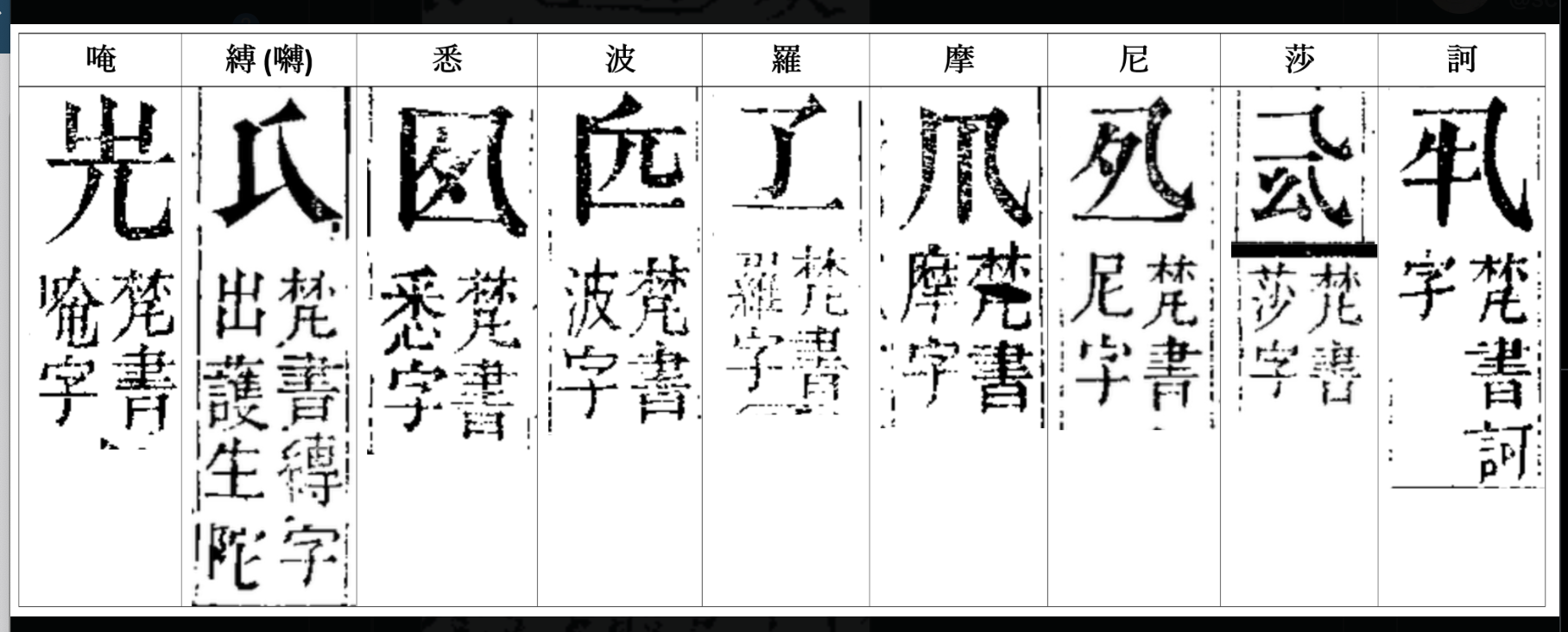
As is quite apparent, the mantra in the Tongtian Rao is quite corrupt. However the Tongtian Rao was not the only source of these 'sanskrit characters'. A 19thc chinese dictionary 字孳補 preserved all 9 syllables of the mantra as 'sanskrit characters'. The nine syllables were skilfully assembled by Sven Osterkamp below.
https://x.com/schrift_sprache/status/1330956121503387648/photo/1 as shown below